
Abnormal load transport
Road abnormal load transport
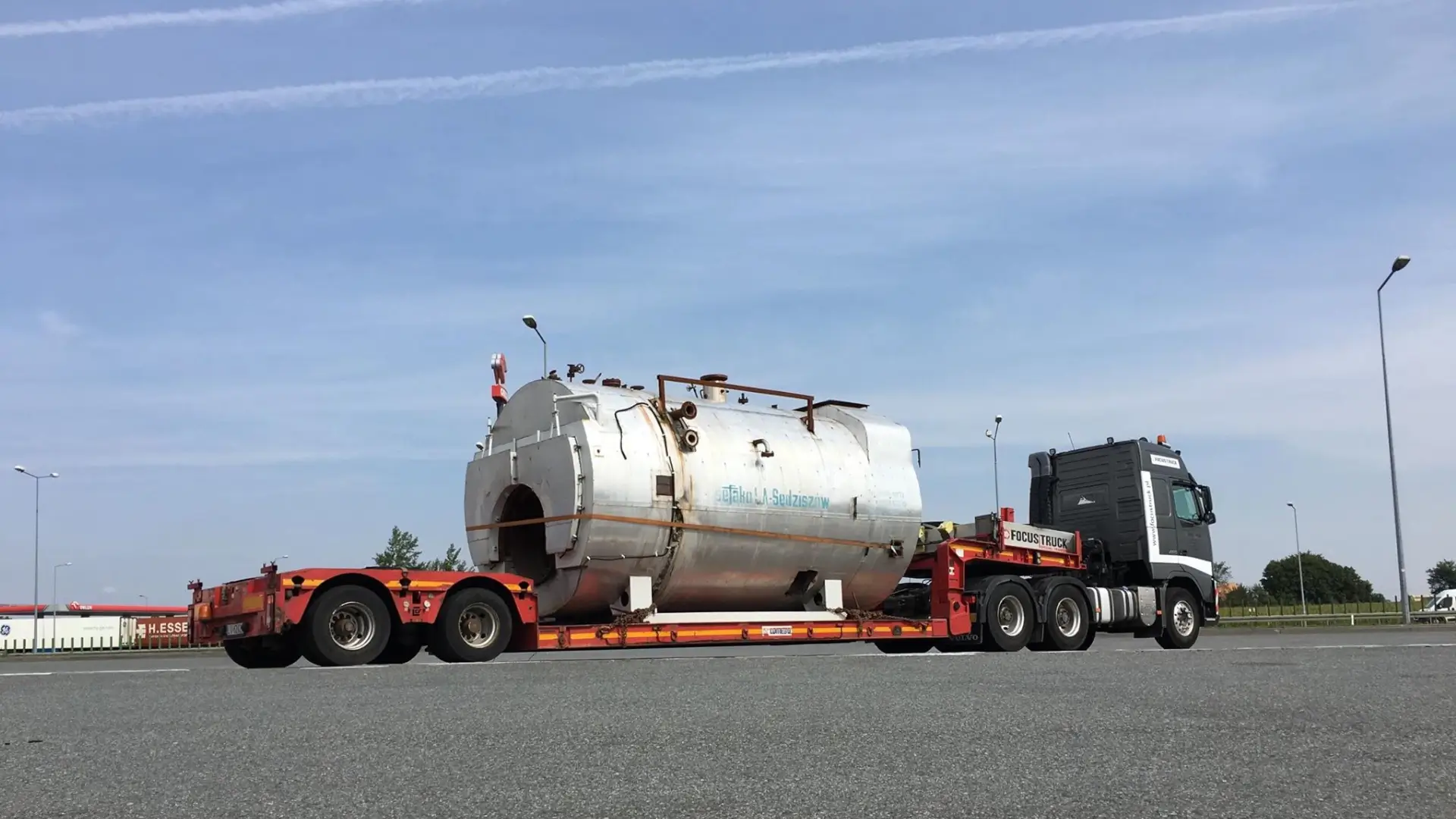
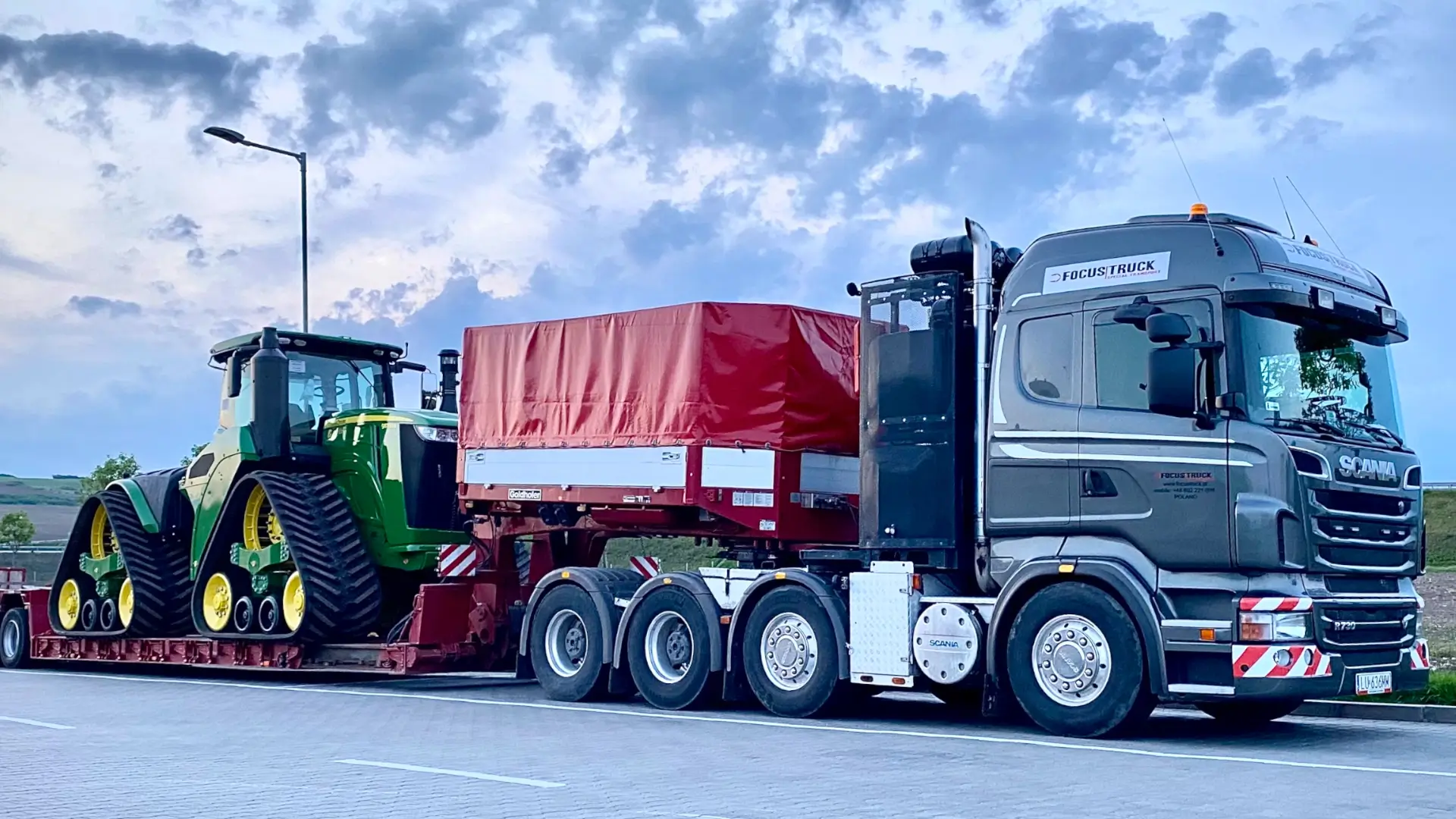
Focus Truck provides comprehensive road transport services throughout Europe and Asia, using specialist semi‑trailers and transport platforms. We obtain permits, arrange pilot vehicles and escorts and monitor transport in real time.
Inland waterway abnormal load transport
Inland waterway transport is an alternative to road haulage, particularly beneficial for very heavy and long loads. We offer barge transport on European rivers and canals – including the Rhine, Danube, Vistula, Oder and other inland waterways.
Maritime abnormal load transport
A solution dedicated to international projects where cargo must be shipped between ports in different countries and continents. Focus Truck arranges sea transport in cooperation with shipowners specialising in project cargo.
Rail abnormal load transport
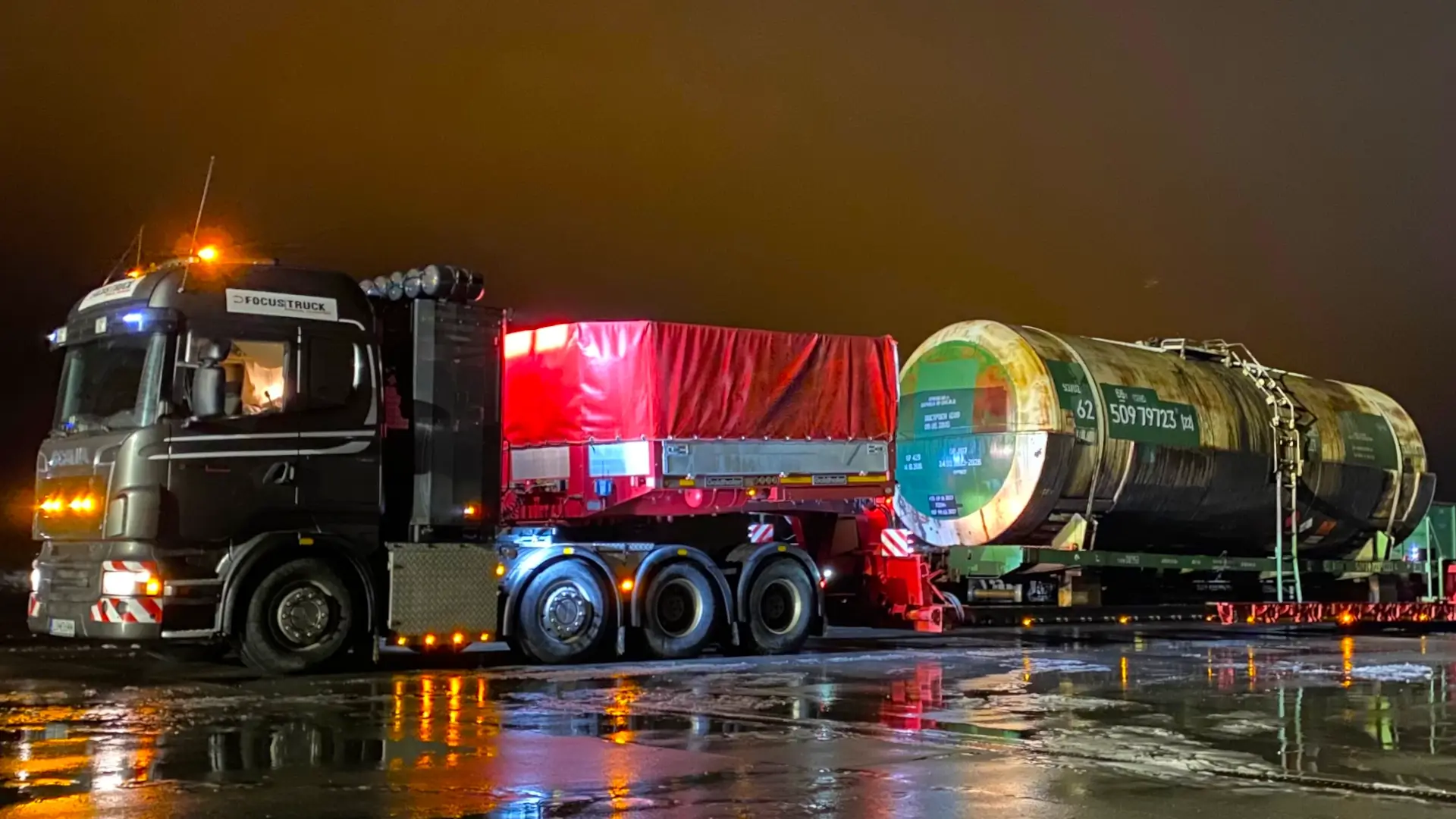
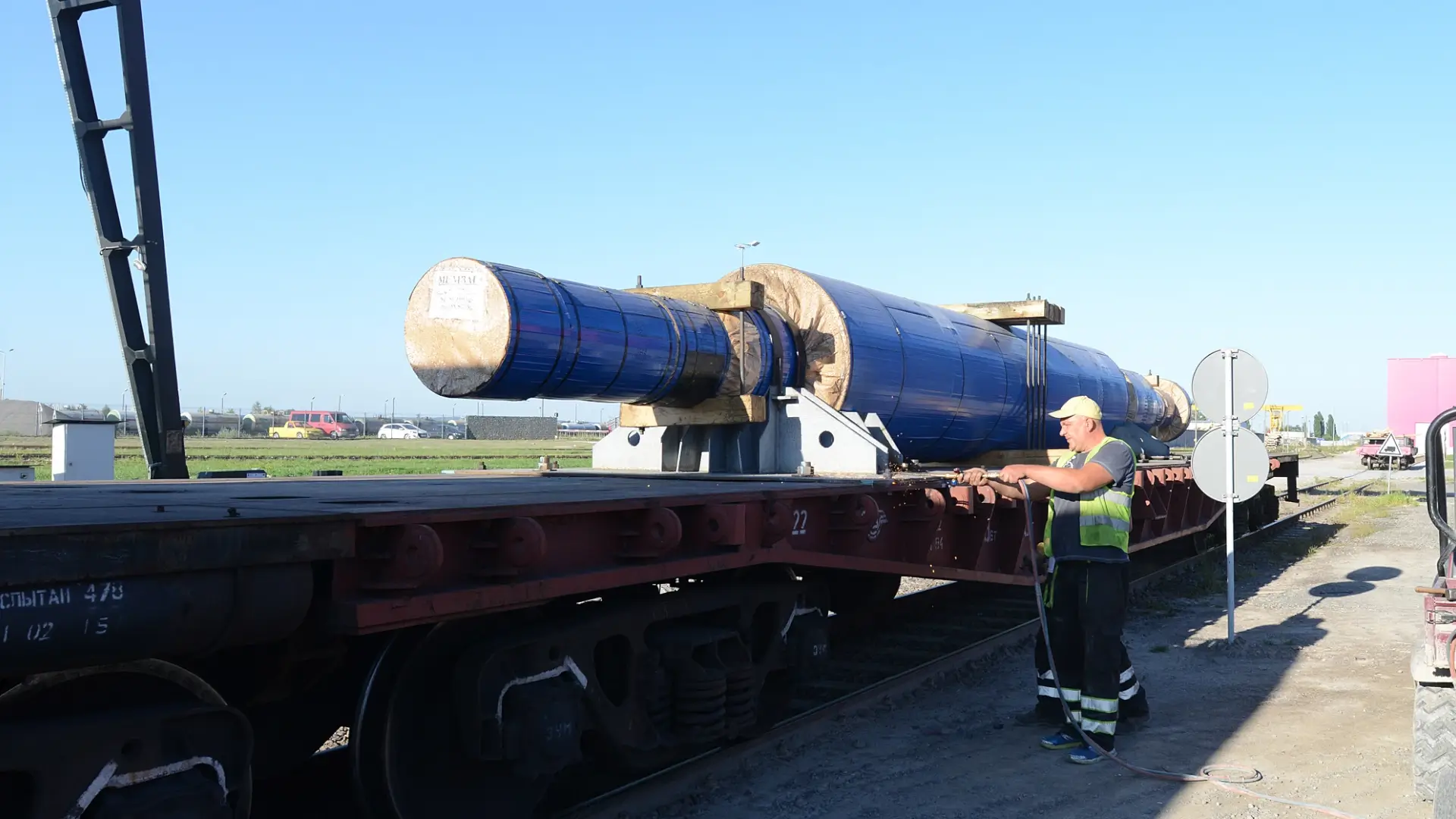
We organise movements using specialist trains on the European and Asian rail networks. We provide rail transport for power transformers, bridge segments, generators and other structures with extreme dimensions, ensuring full operational support and insurance cover.
Transhipment and storage
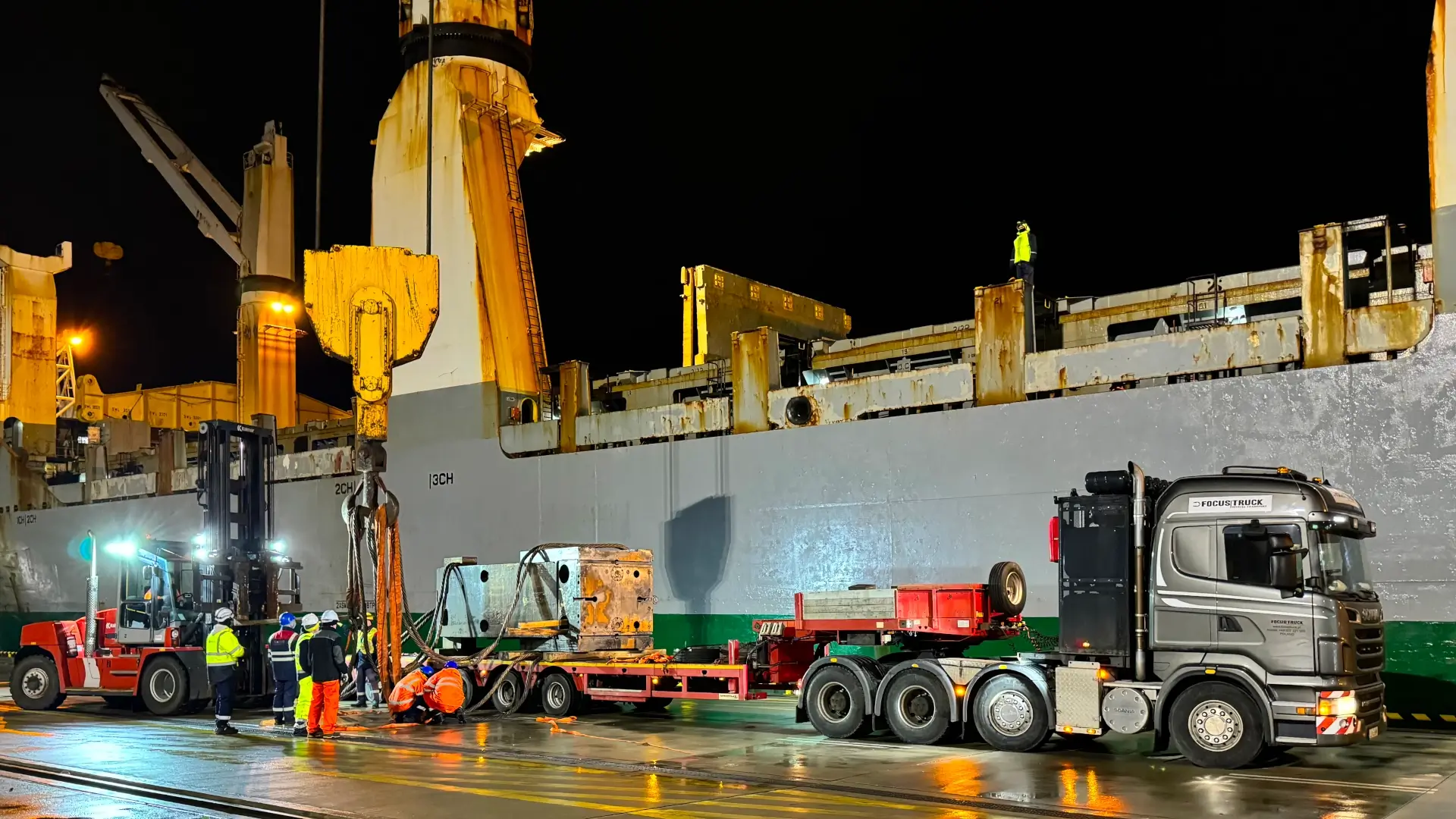
Transhipment and storage are key services supporting abnormal load transport. We offer professional cargo handling operations with specialist lifting equipment and secure storage facilities.
Facility relocation
Company relocation is a complex undertaking requiring precise planning and coordination. Focus Truck has extensive experience in relocating manufacturing plants, production lines and warehouses. We provide a fully comprehensive service.
Abnormal load transport is a specialist logistics service involving the carriage of indivisible loads which, due to their dimensions or weight, exceed the limits laid down in road, rail, inland waterway or maritime regulations. Focus Truck offers comprehensive abnormal load services across Europe and Asia, using all available modes of transport. Our offering includes road, inland waterway, maritime and rail transport, as well as additional services such as transhipment, storage and company relocation.
What is oversized transport and when is It necessary?
Oversized transport, also referred to as heavy haulage, out-of-gauge transport, or abnormal load transport, is a specialized logistics service dedicated to moving indivisible loads that exceed the standard dimensions and weight limits defined by transport regulations in individual countries.
In road transport across Poland and most European countries, a load is classified as oversized when it exceeds the legal parameters for overall length, width, height, or total gross weight of the vehicle combination, including the cargo. According to current regulations, a standard road vehicle set may measure up to 2.55 meters in width, 4 meters in height, between 16.5 and 18.75 meters in length, and 40–42 tonnes in total gross weight, depending on the vehicle configuration. Any load that surpasses even one of these parameters requires a special transport permit and must be carried out in compliance with additional road safety and traffic management requirements.
Oversized transport plays a crucial role in many industries, including heavy manufacturing, construction, energy, machinery, agriculture, and infrastructure development. Typical loads transported in this category include industrial machinery such as hydraulic presses, injection molding machines, production lines, cranes, excavators, and bulldozers, as well as steel structures, prefabricated building elements, bridge segments, wind turbine components, power transformers, industrial tanks, silos, and parts of ships or offshore platforms.
The need for oversized transport mainly arises from the fact that many modern industrial machines and installations are designed as indivisible units. Dismantling them into smaller parts is often technically unfeasible or economically unjustified. Manufacturers design these machines with functionality and efficiency in mind, which frequently results in dimensions far exceeding standard transport capabilities. For example, high-power electrical transformers with capacities of several hundred megawatts can weigh over 200 tonnes and reach lengths of over a dozen meters, making their transport one of the most complex and technically demanding logistics operations.
Oversized transport differs from standard freight not only in technical scope but also in legal and organizational aspects. It requires obtaining special permits from road authorities in respective countries, conducting detailed route surveys (including verification of bridge load capacities, clearance under overpasses, and lane widths on intersections and roundabouts), and often arranging private pilot vehicles or police escorts. In some cases, temporary traffic management changes must be implemented, such as removing road signs, traffic lights, or other obstacles along the route.
Every stage of the oversized transport process must be carefully planned and coordinated to ensure safety, compliance, and minimal disruption to road users and local communities along the route.
Specifics and challenges of oversized cargo transport
Oversized and abnormal load transport is one of the most demanding segments of the logistics industry, requiring not only the right equipment, but above all extensive experience, technical expertise, and the ability to plan and coordinate multiple operations simultaneously. Each oversized transport project is unique and calls for an individual approach – there are no two identical loads or two identical routes, which means every movement is a new challenge that must be thoroughly analysed and meticulously planned.
A key success factor is a precise route survey, which includes verification of all technical parameters of engineering structures along the route, such as bridges, overpasses, viaducts, flyovers, tunnels, level crossings, and roundabouts. One of the biggest challenges in oversized transport is assessing the load-bearing capacity of bridges and overpasses located on the planned route. Many older bridge structures in Europe and Asia were designed and built at a time when abnormal transports were far less frequent and significantly lighter, which means their capacity may be insufficient to safely carry today’s loads in excess of 100 or even 200 tonnes. In such cases, detailed bridge assessments must be carried out by certified structural engineers, based on the structure’s technical documentation and static calculations that take into account the axle load distribution of the vehicle combination carrying the cargo. In some situations, additional protection measures are required, such as reinforcing the bridge structure, using load-spreading platforms, or even rerouting the transport to bypass the critical structure entirely.
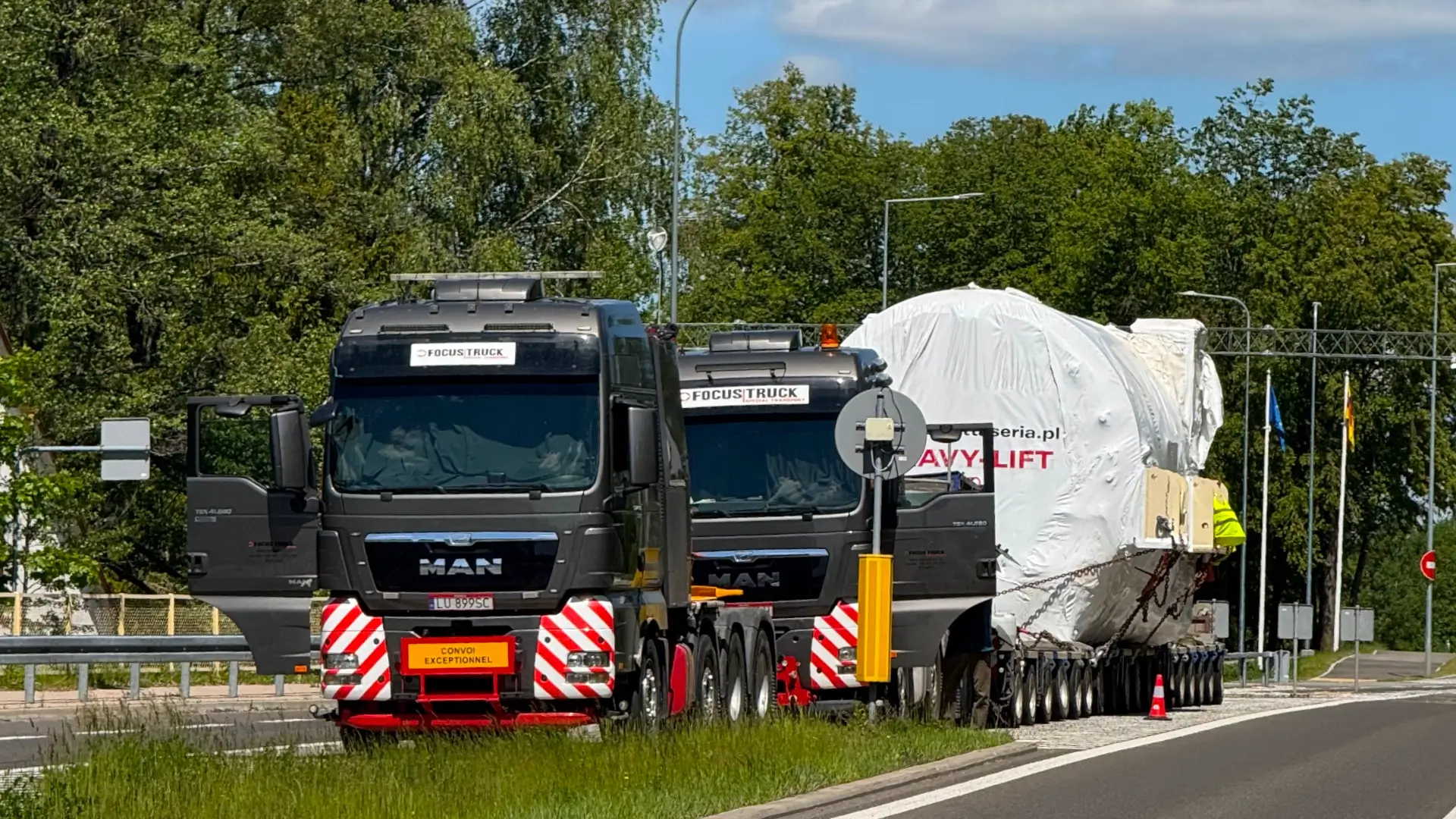
Another major challenge is the organisation of pilot and escort vehicles during the movement of oversized loads. Depending on the permit category and the parameters of the transport configuration, regulations may require a civilian pilot vehicle driving ahead of or behind the convoy to warn other road users of the approaching abnormal load, or a police escort providing additional protection and coordinating traffic at junctions and other critical points along the route. Pilot vehicle operators must hold the appropriate certifications and have proven experience in escorting abnormal loads, as well as a solid understanding of oversized transport regulations in the country of operation. Focus Truck cooperates with licensed pilot service providers throughout Europe and Asia, enabling us to efficiently arrange escort services regardless of the project location.
Time planning is another crucial aspect of oversized transport. In many cases, abnormal load movements are only allowed during specific time windows, most often at night or in the early morning hours, when traffic volumes are lower, which reduces the risk of congestion and increases road safety. Some routes may also require temporary road closures, removal of road signs, traffic lights, or other roadside infrastructure, which in turn demands prior agreements with road authorities and local administrations. For long international routes, the journey can take several days or even weeks, which requires planning safe parking locations for the vehicle combination and ensuring proper security of the cargo during layovers.
Need Transport?
Contact us to receive a professional quote and learn more about our capabilities!
