The war in Ukraine clearly demonstrates how critical it is to have road infrastructure adapted to the needs of heavy transport.
At the end of December, the European Commission highlighted the transport of a power plant from Lithuania to Ukraine. The operation took 11 months and enabled the movement of equipment with a total weight of 2,399 tonnes using 149 transports, 40 of which were oversized. The heaviest units were stators weighing 172 tonnes each. “The support provided by the Governmental Strategic Reserves Agency (RARS) played a key role in ensuring the complex transport of these components,” the Commission stressed in its communication.
The longest route in Europe
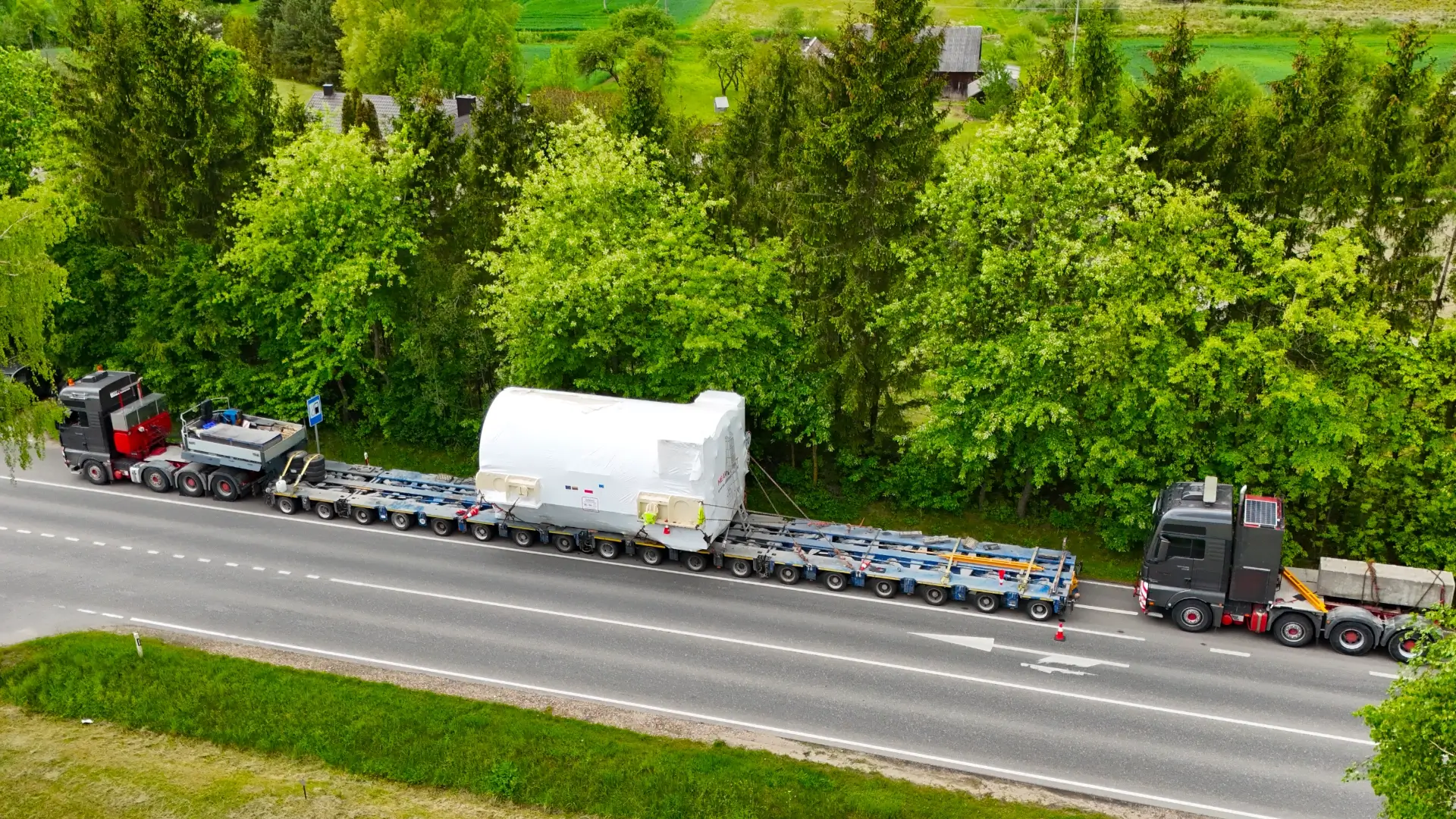
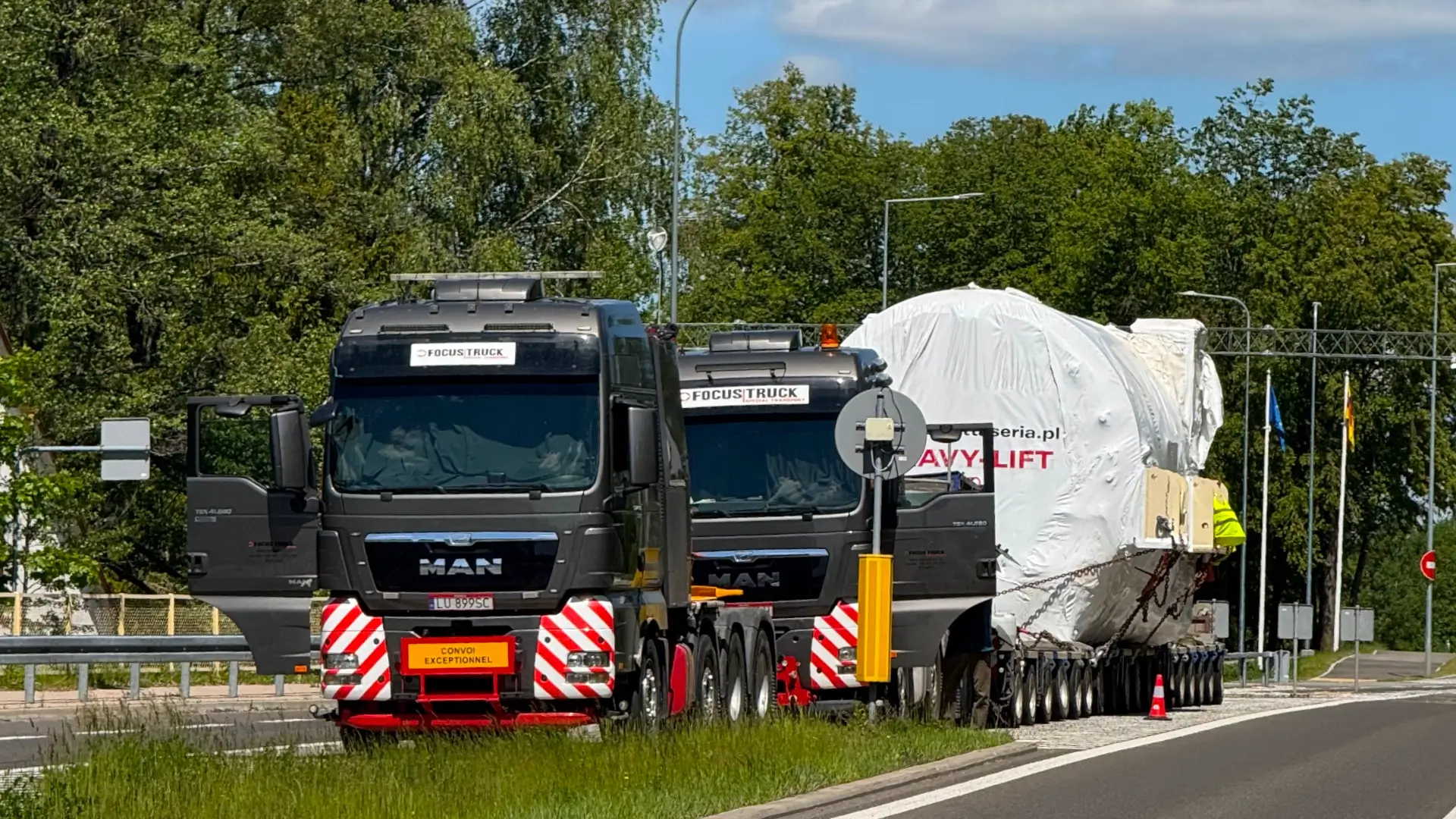
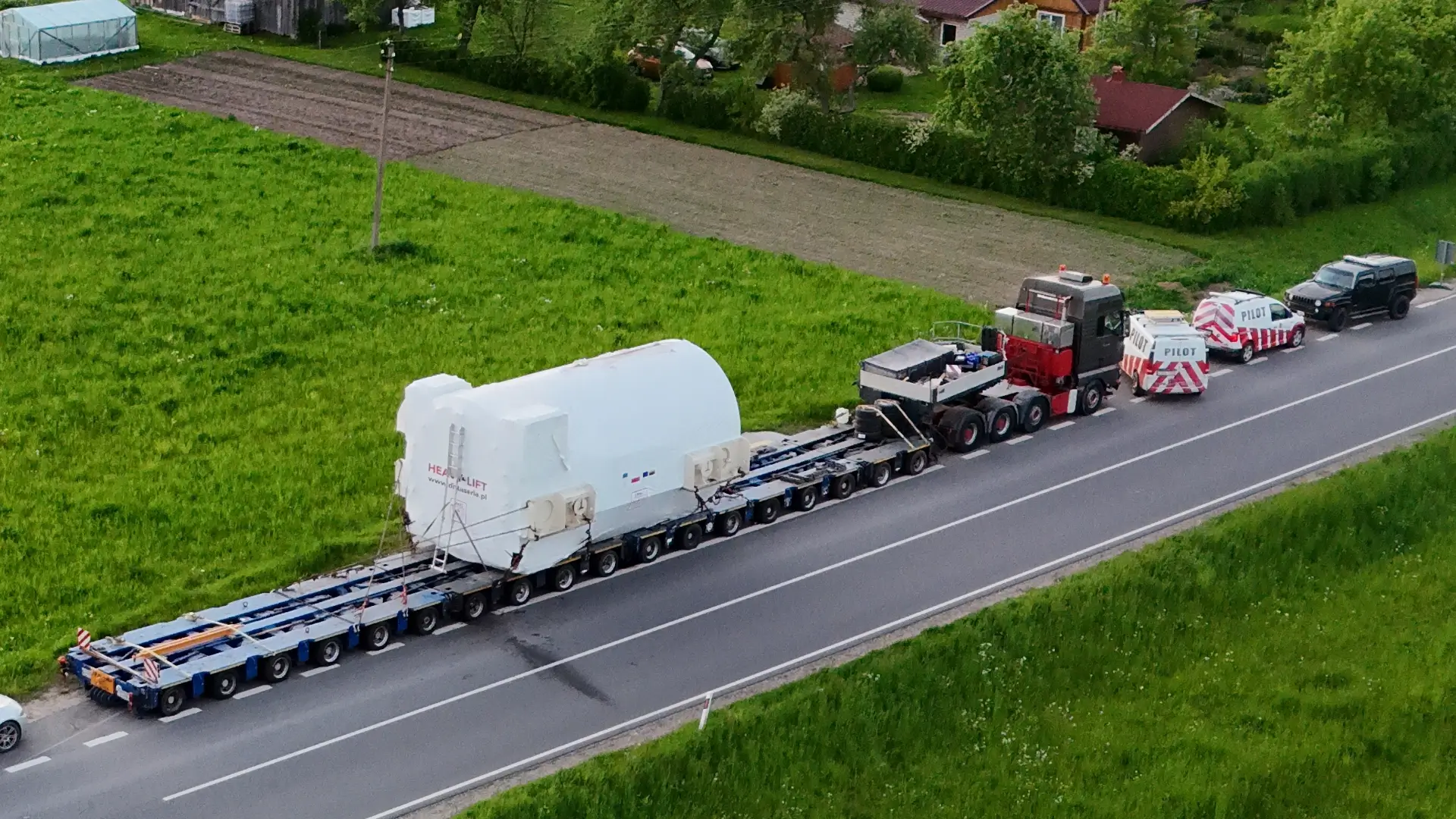
RARS relied on Polish carriers, and the transport of the heaviest elements was carried out by Focus Truck. “We performed two transports from Vilnius. One went to western Ukraine and the other to the east, 100 km from the front line. The second route was 2,350 km long and is likely the longest route in Europe covered in 2025 by a modular combination with a gross weight of 270 tonnes,” notes Dominik Woch from Focus Truck.
The driving itself took a month and was far from fast. “Such a combination can reach speeds of up to 80 km/h, but to avoid the risk of tipping on bends and to be able to brake safely, we travelled much more slowly. A 90‑degree turn at a tight junction can take up to one hour of work. We only moved at night, and daily distances ranged from 30 km to a record 280 km,” explains Woch.
He adds that roads, especially in Lithuania, are not well adapted to abnormal loads. Carriageways are narrow and roundabouts very tight. “On one roundabout, two axles (out of the 18 the semi‑trailer had) were hanging over a ditch because the combination simply could not fit within the junction,” recalls D. Woch.
The combination entered Poland via Ogrodniki because in Budzisko a new overpass was under construction and the headroom was limited to 4.67 m. Before Suwałki, the tractor and trailer had to reverse 4.5 km back to Sejny because the junction was too tight for the 37‑metre‑long combination. “That night we covered just 32 km,” adds Woch.
He acknowledges that the infrastructure currently being built in Poland is much more friendly to heavy transport than what was constructed 15–20 years ago. “You can see that roundabouts in Poland have been redesigned and adapted to heavy traffic. In Suwałki there are also completely flat roundabouts, and new roads less than 10 years old have overpasses with clearances above 5 m, whereas those built 15–20 years ago often offer only 4.85 m, which forces us to look for diversions. When preparing a route, we count centimetres: one of the overpasses had a clearance of 489 cm, leaving us just 1 cm. One of our guys was sitting on the generator and guiding us via radio on whether we would clear it,” describes Woch.
A souvenir cake
Letting air out of the tyres does not help, because the semi‑trailer would sit on the ground. The frame of the modular trailer is only 1 cm above the road surface, and in this “zero” position the module is 78 cm high.
Woch assesses that, in terms of junction size and road quality, Poland is a mix of East and West. “In Poland we passed under 180 overpasses, whereas in Ukraine we covered more than 1,000 km and encountered only eight overpasses,” compares D. Woch from Focus Truck.
Ukrainian roads are often associated with potholes, but this is not accurate. “The Ukrainians are constantly repairing them and they are in good condition. Only one section was poor, and I would say 90 percent of the route was in decent shape. There is no bribery either, because the bribe‑seekers are at the front. No one held out a hand to us,” Woch assures.
He adds that there were no major technical issues with the equipment, although tyres did occasionally burst. “When that happens, you have to jack up the semi‑trailer and get underneath. Each module has locking devices that hold the deck at the set height if a hydraulic hose fails. The semi‑trailer had 18 axle lines, and a few more were still available at the yard. We used just enough axle lines to distribute the load and keep the axle load on the trailer below 11 tonnes, but without unnecessary surplus, because each additional axle line adds another 1.5 m to the overall length,” explains Woch.
The heaviest units reached their destination safely, and each unloading operation took about two hours. Fortunately, the city was not bombed by Russian forces during this time. “In the end we received a very kind gesture: a lady from the power plant brought us a cake – pastries from the employees,” says Woch.
The European Commission calculates that, so far, 9,500 power generators and 7,200 transformers have been delivered to Ukraine.